Description
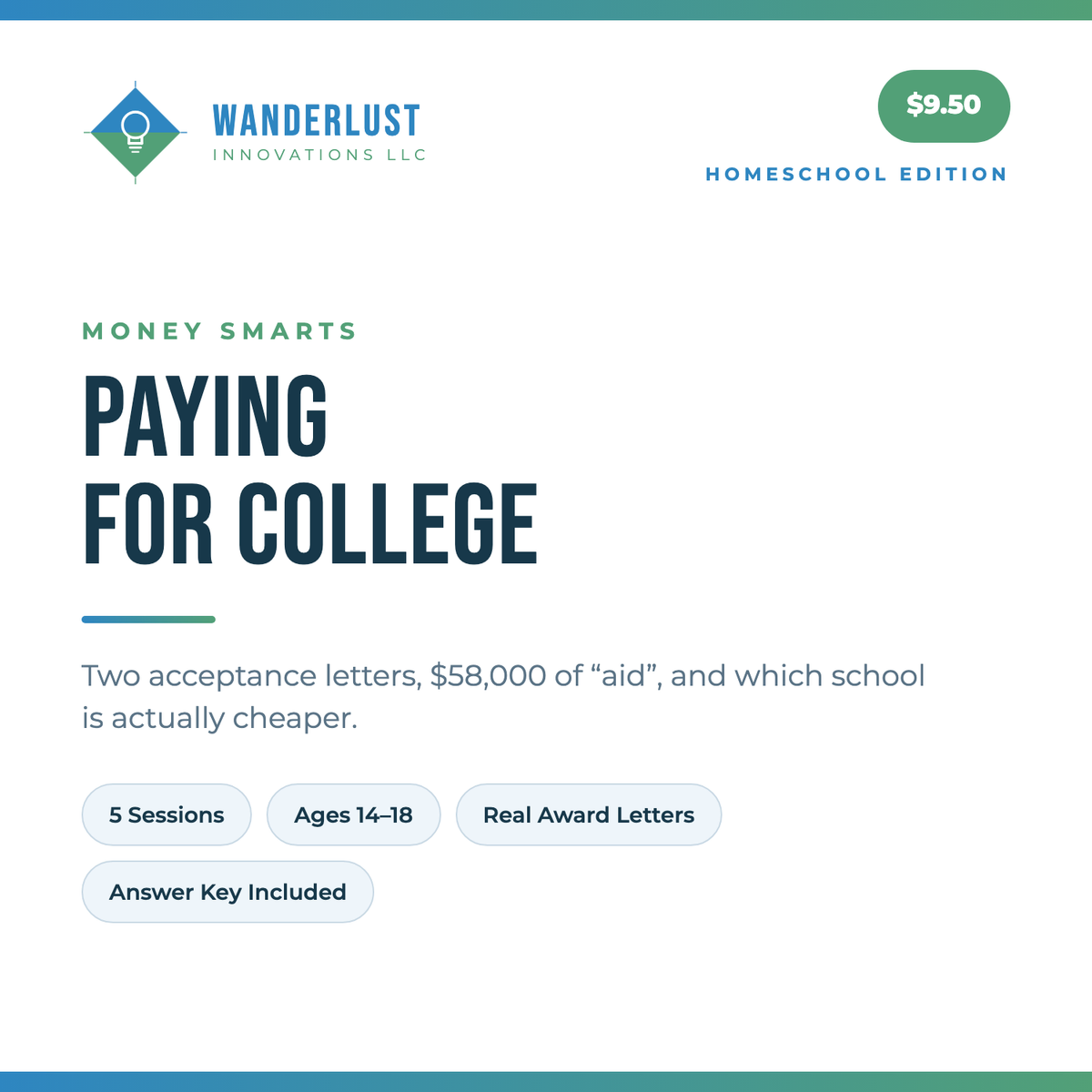
Five sessions on paying for what comes after high school — and the unit most worth doing alongside your student rather than over their shoulder.
Aniyah Porter has two acceptance letters. One school offers $58,000 in “aid”; the other offers $13,000. The first one is the more expensive school, and working out why is the unit.
Your student learns which kinds of aid have to be paid back, what the FAFSA actually determines, how to find the real number under an award letter's headline, and what a loan commits you to against a realistic starting salary.
If your student is applying now, run the award-letter session on their own letters. The method transfers exactly.
WHAT'S INCLUDED
Written by a licensed K-12 business teacher with more than thirteen years in the classroom. Built to be taught by a parent with no background in the subject.
You might also like
Insurance and Managing Risk | Money Smarts Personal Finance | Homeschool Edition

Taxes and Your Paycheck | Money Smarts Personal Finance | Homeschool Edition

Money Basics | Money Smarts Personal Finance | Homeschool Edition