
Description
A free single-session lesson for ages ten to fourteen, and the introduction to the middle school scam-literacy line.
A text says Kai won a $50 gift card from a raffle he does not remember entering.
The lesson teaches one question — not five warning signs, one question — because a younger student being rushed by a scammer needs something they can actually recall under pressure.
The scenarios throughout this line were chosen because they are what a middle schooler genuinely meets, not simplified versions of adult scams.
WHAT'S INCLUDED
•Parent Guide — one page, no preparation needed
•The prize message, and what is wrong with it
•The one question, and three more examples to apply it to
•Answer key explaining each
•Hours & Work Record for logging time and filing portfolio evidence
Written by a licensed K-12 business teacher with more than thirteen years in the classroom, adapted for a middle school audience. Built to be taught by a parent with no background in the subject.
You might also like
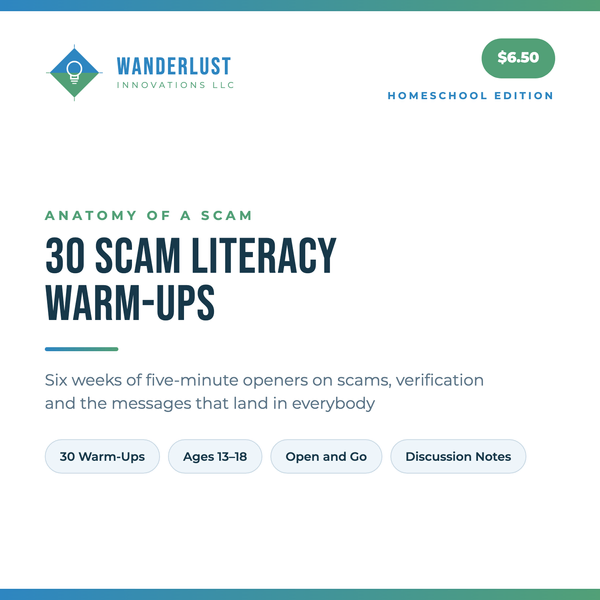
30 Scam & Media Literacy Warm-Ups | Homeschool Edition
Ages 13–18·Digital Life & Media Literacy
Faith-neutralNot yet rated
$6.50
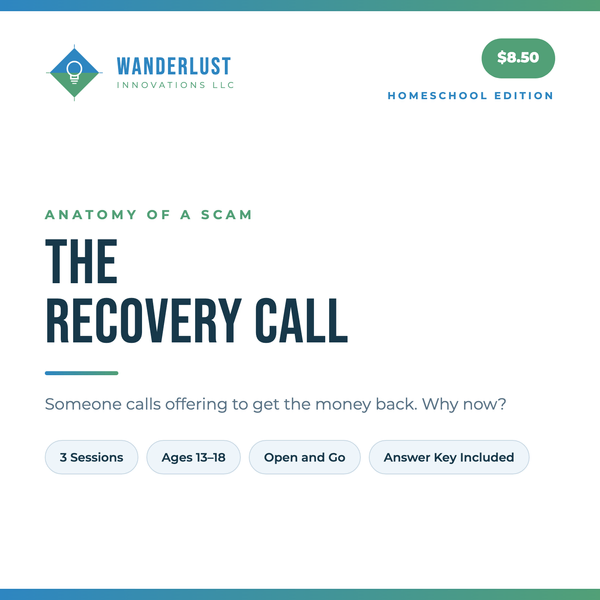
The Recovery Call | Anatomy of a Scam | Homeschool Edition
Ages 13–18·Digital Life & Media Literacy
Faith-neutralNot yet rated
$8.50
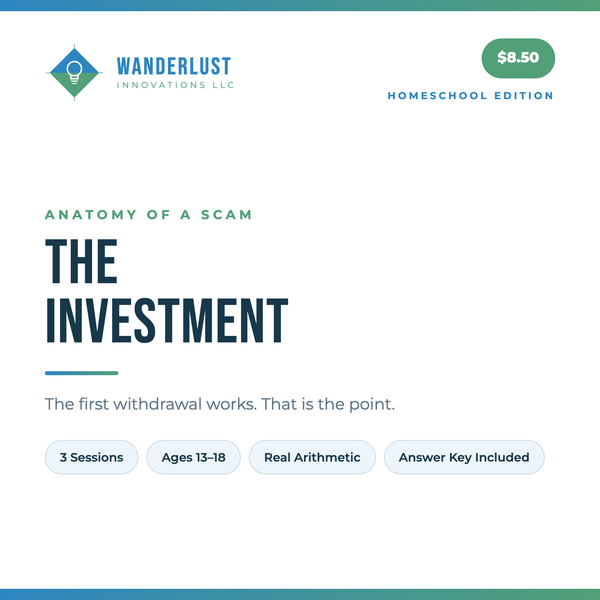
The Investment | Anatomy of a Scam | Homeschool Edition
Ages 13–18·Digital Life & Media Literacy
Faith-neutralNot yet rated
$8.50
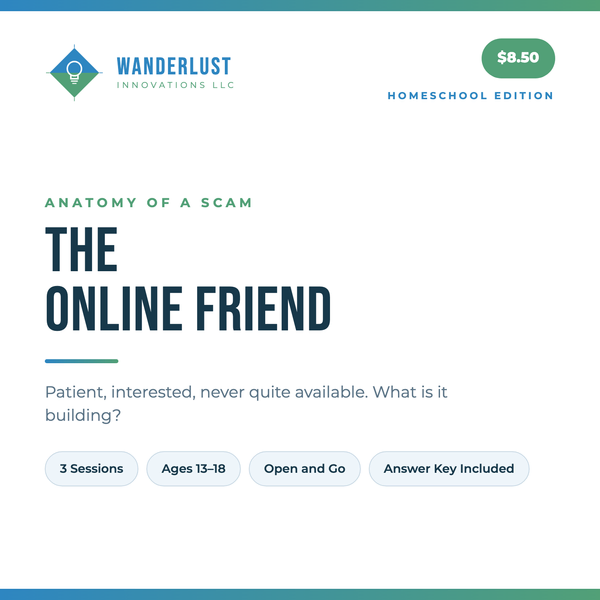
The Online Friend | Anatomy of a Scam | Homeschool Edition
Ages 13–18·Digital Life & Media Literacy
Faith-neutralNot yet rated
$8.50
Too Good to Be True | Scam Literacy for Ages 10–14 | Homeschool Edition
Not yet rated
Free
Download previewWorldviewFaith-neutral
AgesAges 10–14 (≈ grades 5th–9th)
SubjectDigital Life & Media Literacy
Resource typeSingle lesson
ApproachUnit study, Eclectic
Works forOne student, Co-op / group
Per session30–60 min
Days a weekFlexible
Total lengthOne week
Parent prepOpen-and-go
Who teachesParent-guided
ReuseReusable, some consumable pages
FormatPrintable PDF
Learning differencesLow reading level
RecordsIncludes assessments, Hour logging, Portfolio samples
Keywordsdigital life & media literacy, scam literacy middle school, lesson, middle school, homeschool digital life & media literacy, good, true