Description
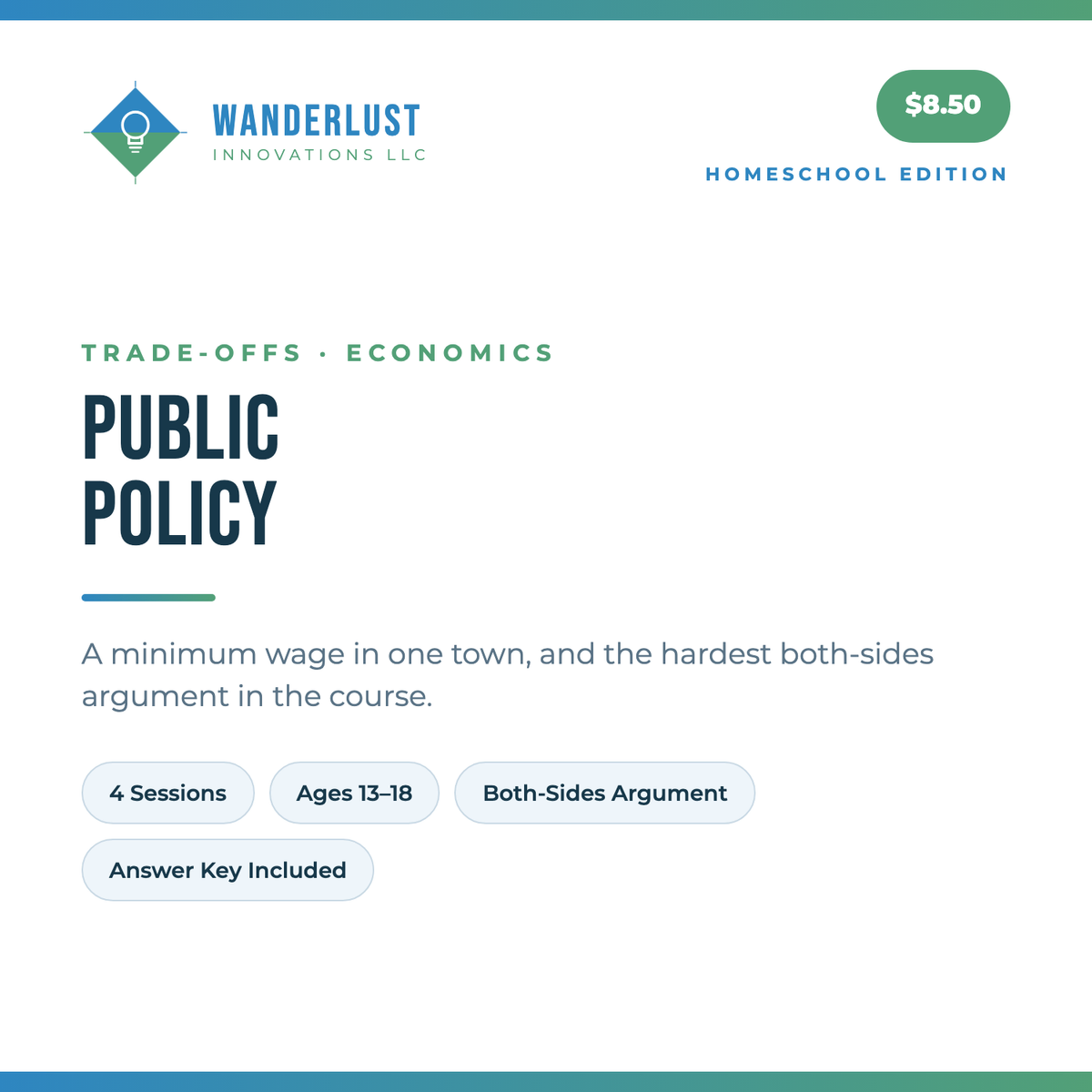
Four sessions on the policy question where real people clearly win and real people clearly lose.
Corbin Falls considers raising its minimum wage. Your student reads the labor supply and demand schedule, applies the price-control mechanics from Unit 1, then traces who is helped and who is not — to named people in the town rather than to totals.
The closing argument is the hardest in the course, built so that both cases are genuinely strong. The rubric marks whether each side was given its strongest form, not which side your student picked.
If you have a settled view on this one, argue the other side. It is the most useful thing you can do.
WHAT'S INCLUDED
Written by a licensed K-12 business teacher with more than thirteen years in the classroom. Built to be taught by a parent with no background in the subject.
You might also like
30 Economics Warm-Ups | Homeschool Edition
Trade-Offs Assessments | Homeschool Edition
Money, Banking & the Federal Reserve | Trade-Offs Economics | Homeschool Edition